As the only part of a cue that touches the cue ball, the tip is one of the most important facets to your cue’s playability. It is often the first thing that you will notice if you are playing with a cue that is less than ideal, and even professional snooker players tinker with their cue tip mid-match. But what can you do to ensure that your cue tip is perfect? Here’s a few suggestions to get it in tip-top shape!
Invest in a good tip
There is no question how important a tip is to your game, so why cheap out on one? Some tips are more costly, however these are almost always worthwhile when compared to cheaper tips because they:
- Keep their shape longer, requiring less maintenance.
- Hold chalk better and more evenly, reducing miscues.
- Deliver better energy transfer, meaning shots take less effort and are more predictable

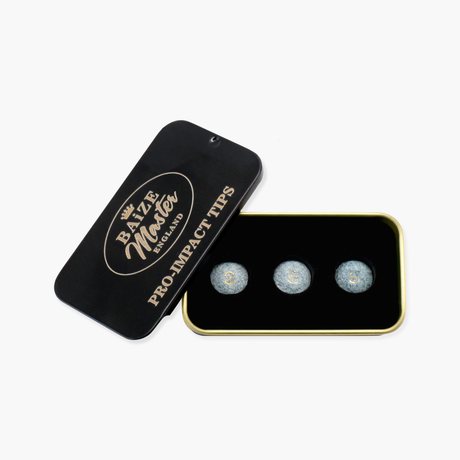
Baize Master Pro-Impact tips are our favourite. They use layers of Buffalo leather on top of a Japanese pig skin backing. This unique mix of leathers allows for a tip that not only holds its shape, but one that transmits energy into the cue ball exceptionally well, leading to better cue ball control. The backing also makes them easier to fit as they are more likely to be perfectly flat.
Find the right density for you
No two tips are identical, and importantly they often have different densities. Typically, these densities are soft, medium, and hard – some brands may also offer supersoft and superhard. These densities do have distinctly different feelings on the shot so it is critical to find out which suits your playstyle:
- Soft – Compresses more which allows for a longer contact time on the cue ball. This allows for more spin, but means the tip deforms easier and requires more maintenance
- Medium – A perfect middle ground. This tip offers a great mix of energy transfer and spin, whilst also not needing as much maintenance as a soft tip.
- Hard – This tip requires little maintenance and is great for a player who likes punching shots in. The lack of compression does mean slightly less energy transfer and spin though, and some may struggle to hold lots of chalk.

![]() Use a Break Cue
Use a Break Cue
Tip deformation is repeated heavy impacts on the cue ball, and the break is a prime example of this. Using a break cue is not just to produce better breaks, but it is also to protect the tip on your playing cue and help it to keep its shape longer.
Break cues use a specialized tip that is ultra-hard, and some may even use phenolic tips which are plastic and so they don’t deform. Of course, this does help provide the maximum energy transfer into the break, however it also lets the ultra-hard tip take the impact and not the playing cue – this means that your playing cue tip will need much less maintenance.
For example, our Baize Master Crusher cues are tailor-made for breaking. They feature a phenolic ferrule which is a lot tougher than brass. It also comes with an 11mm super hard breaking tip which is well equipped to take the brunt of the break. Our Jonny 8 Ball Destroyer also follows the same formula, however that has a crystal tip on it instead.

Make Sure the Tip is Properly Shaped
OK, so you have a nice new tip, in a soft density because you play with a lot of sidespin. But is it the right shape? There is no “correct” tip shape, however a tip that is too flat means that the edge of the tip will contact the cue ball first if you hit the cue ball anywhere other than dead centre, creating a higher chance of miscues and limiting the options that you have for spin control.
It is best to keep a rounded shape for a cue tip (about the same curvature as a 10 pence coin) because the dome shape allows for cleaner and more predictable contact with the cue ball, and subsequently provides many more options for using spin.

Find a Good Tip Fitter
It is all well and good knowing which tip is right for you, but getting them onto your cue is another thing altogether. For inexperienced players, it is often best to leave this job to a professional cue doctor, as many things can go wrong during the process if a player does not know what they’re doing. There are many of these up and down the country, covering multiple areas. It is important to consult a professional as:
· They are experienced, and have fitted hundreds if not thousands of tips before. This means that they will be able to avoid damaging the cue.
· They will shape the tip to your liking.
· They have specialized equipment like glues and clamps to ensure the tip is put on evenly.
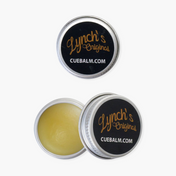
At Cue and Case, we are enthusiastic about enhancing the player experience, and for this we recommend and have maintained a good relationship with Cue Care Jim. Inventor of Lynch’s Cue Balm and based in Birmingham, Jim is an experienced professional with a passion for cue care. He is full of sound advice and he has supported players with all sorts of cue care needs at events like BAPTO and Golden 8 ball, as well as hand-fitting some of our own cues with Baize Master Pro-Impact tips (which he highly recommends)

Conclusion
A great tip can make all the difference, and putting in a little bit of care and attention when choosing and maintaining your cue tip is one of the easiest ways to see improvement in your game. A good tip gives you all the confidence you need, and helps you get more out of every shot. Time for an Upgrade? Browse our wide range of cue tips and find the one that is perfect for you!